nb.Nesim Benba

02 / Nesim Benba

Research & projects

Machine learning for healthcare, medical imaging, and modeling uncertainty.

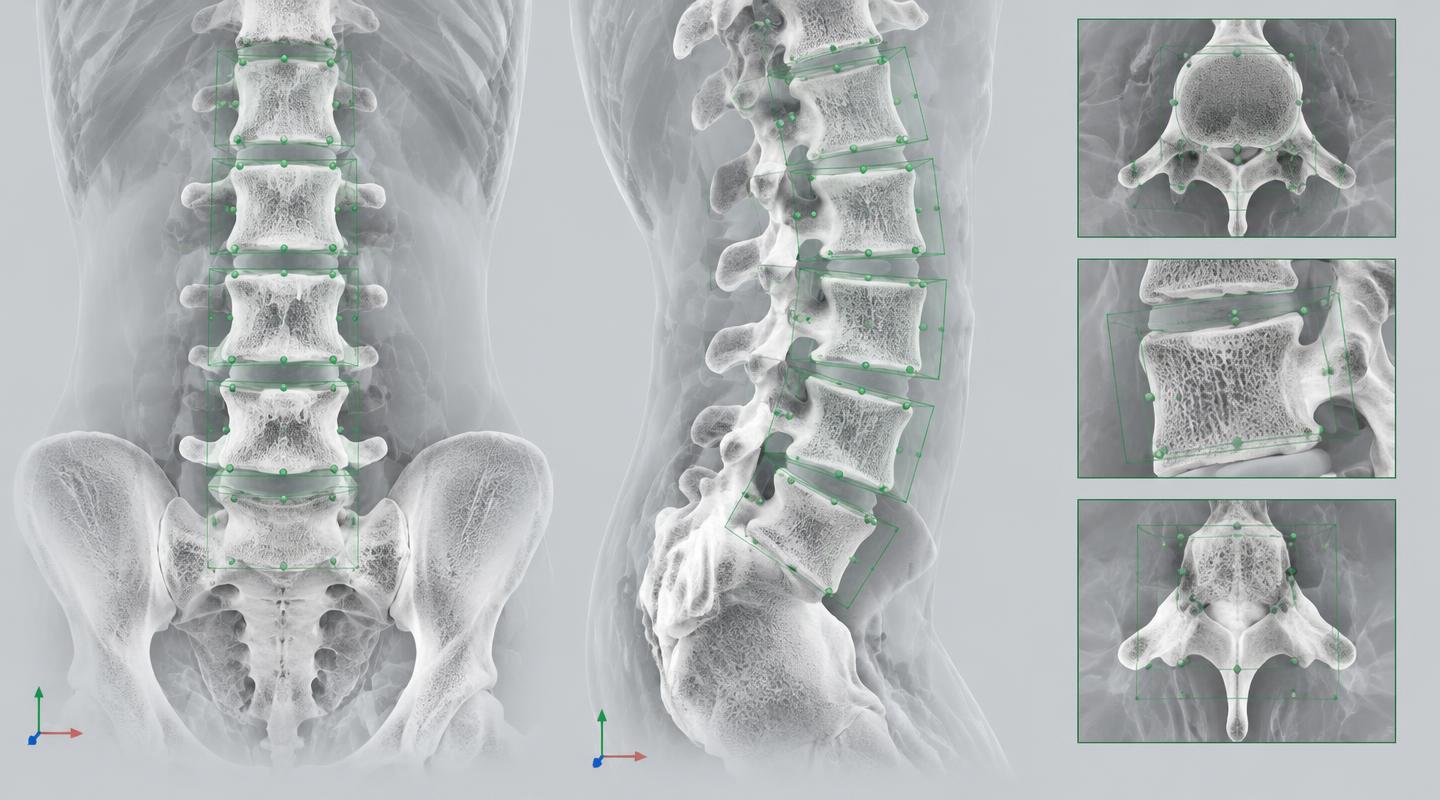
Conceptual vertebral reconstruction with oriented bounding boxes and anatomical landmarks
AI-generated concept illustration · Not project data or hardware

01 / Healthcare ML · Siemens Healthineers

Jun – Aug 2026 · Princeton, NJ

3D anatomical localization for surgical imaging

3D U-Net · ResNet · Volumetric medical imaging

An automated detection pipeline for locating and orienting vertebrae in volumetric surgical scans, supporting preoperative anatomical localization.

  • Built a 3D U-Net/ResNet oriented-bounding-box detection pipeline, achieving 99.6% vertebral-center landmark accuracy while reducing manual annotation.
  • Achieved 2.3 mm mean localization error and 3.5° median rotation error on held-out volumetric surgical scans.
  • Owned preprocessing, augmentation, training, hyperparameter tuning, and evaluation; used advanced augmentation and normalization to improve robustness across diverse imaging conditions.
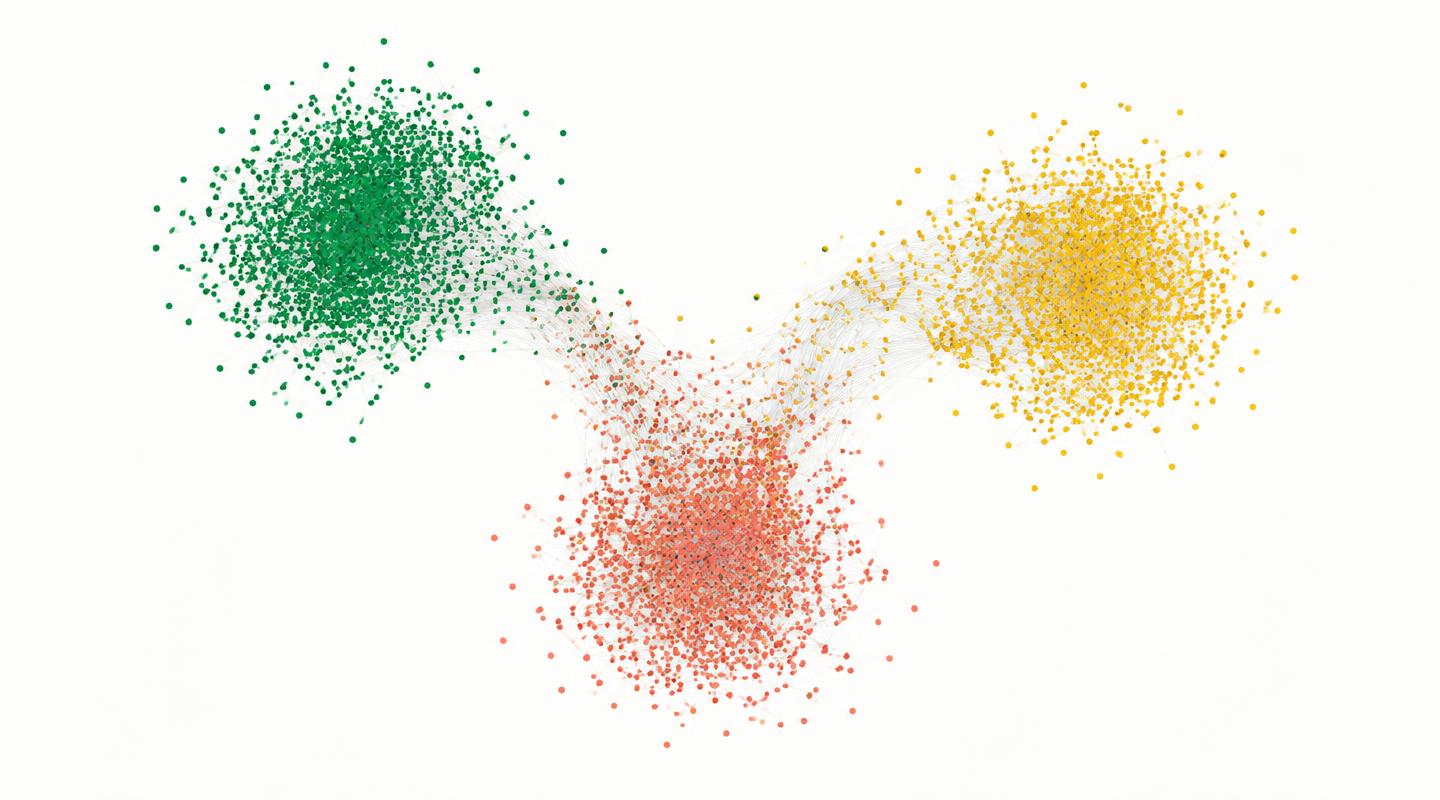
Conceptual diffusion embedding with three distinct clusters of volatility regimes
AI-generated concept illustration · Not project data or hardware

02 / Unsupervised learning · Modeling uncertainty

Independent project

Volatility Regime Detection with Spectral Diffusion Clustering

Python · NumPy · SciPy · Scikit-learn · Pandas

Recovering low-dimensional market regime structure from noisy, high-dimensional financial signals using diffusion maps and spectral clustering.

  • Constructed a Gaussian-kernel affinity graph over rolling realized volatility, VIX, returns, and cross-asset correlations.
  • Embedded the data using leading eigenvectors of the normalized Markov transition matrix; selected the number of regimes with the eigengap heuristic.
  • Clustered diffusion coordinates and validated regimes against market-stress periods including 2008 and 2020, comparing stability and transitions with an HMM baseline.
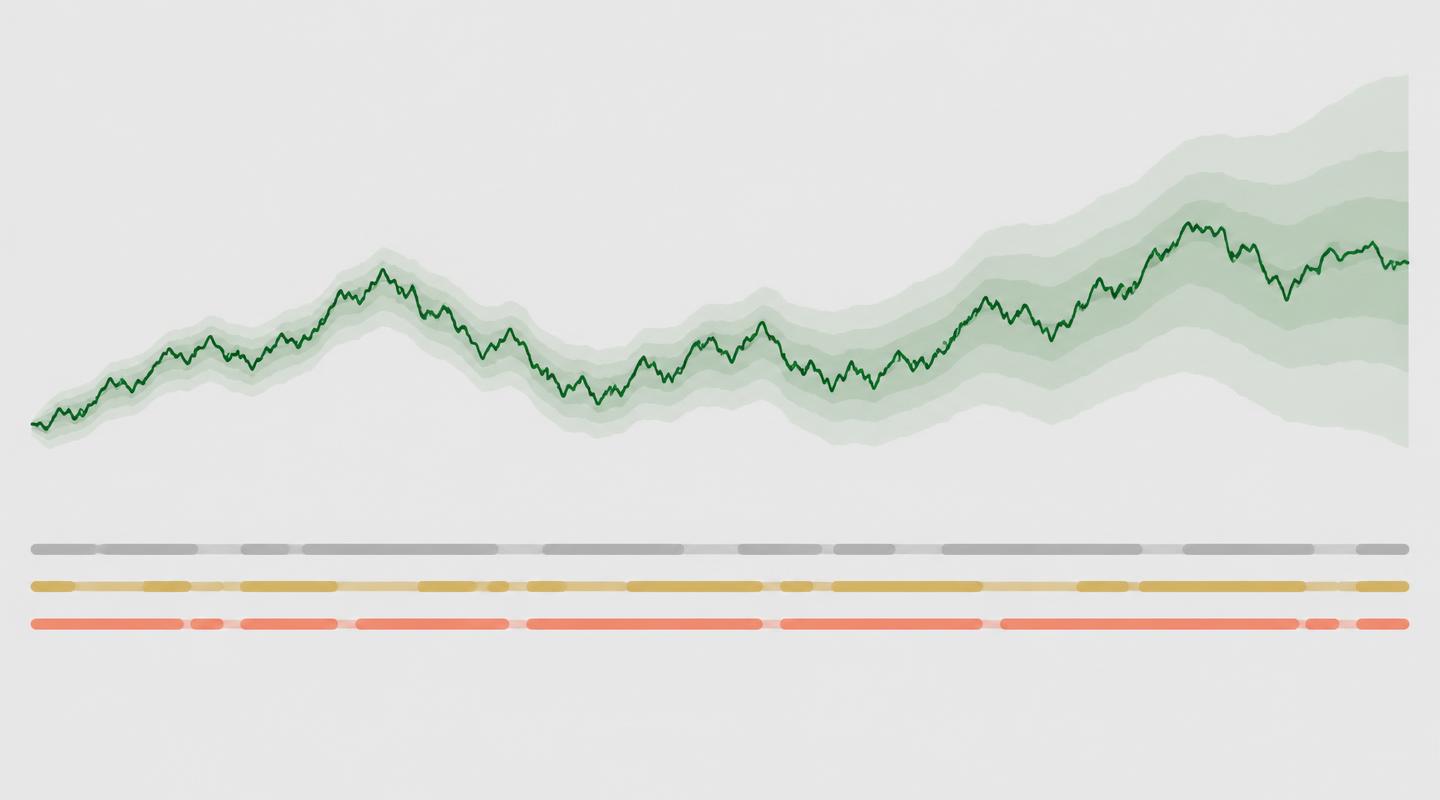
Conceptual time-series with probabilistic uncertainty bands and latent regime sequences
AI-generated concept illustration · Not project data or hardware

03 / Deep reinforcement learning · Duke Research

May 2026 – Present · Advisors: Dr. Pan Xu, Weixin Wang

Deep RL for Portfolio Optimization

PPO · POMDP · Hidden Markov Models · Stable-Baselines3

Learning adaptive decisions under latent volatility states, combining probabilistic inference, heavy-tailed return models, and reinforcement learning.

  • Formalized allocation as a regime-switching POMDP. A causal HMM filter uses Baum–Welch and forward-only belief updates over VIX and realized volatility, without look-ahead bias.
  • Modeled state-conditional returns with a multivariate Student-t, Gaussian scale-mixture and Cholesky covariance, stabilized with robust Bayesian shrinkage.
  • Extended PPO with belief-state observations, regime-aware Differential Sharpe rewards, and transaction costs; benchmarked bandit and policy-gradient methods against prior DRL-vs-MVO work (Sood et al., 2023).
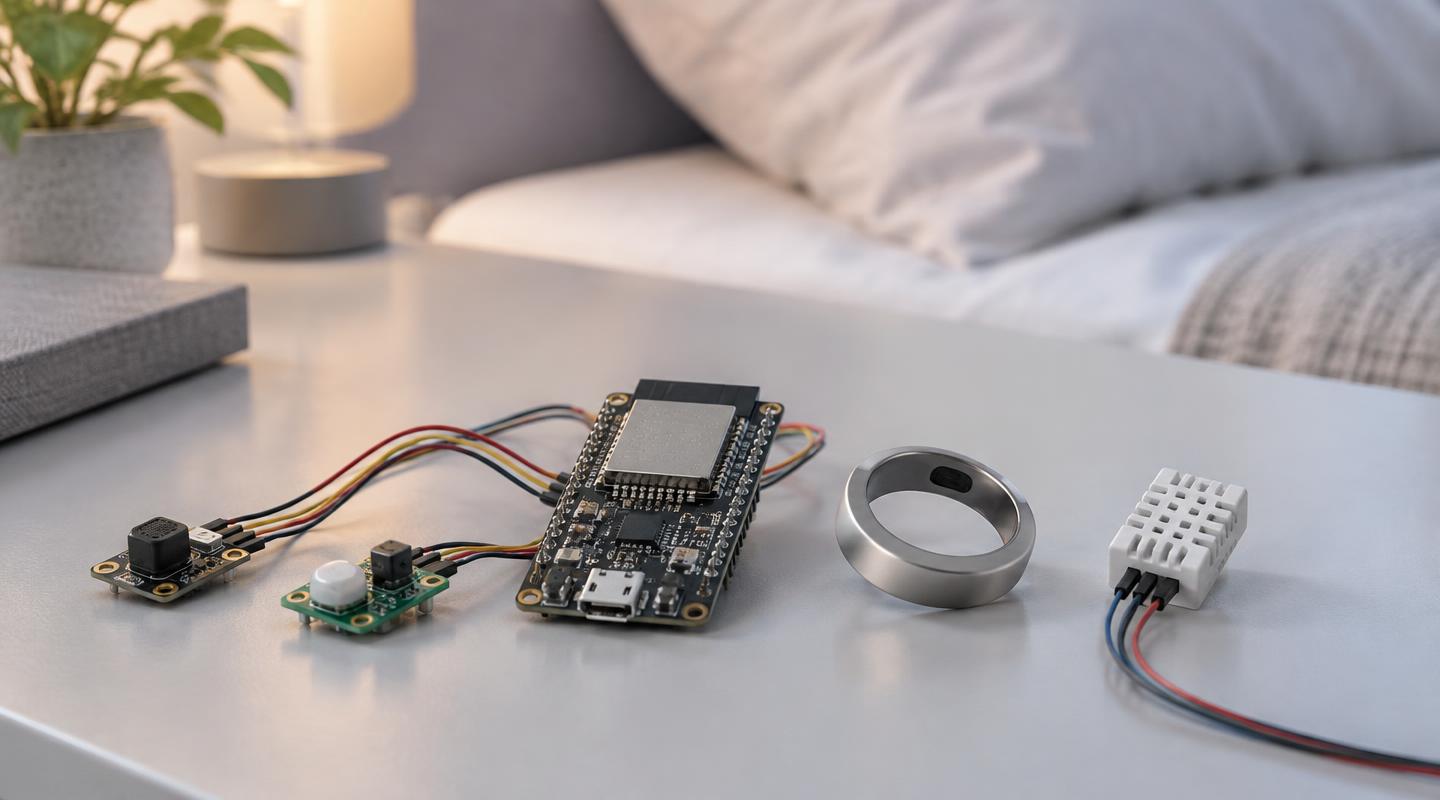
Illustrative wearable ring, ESP32 board, and environmental sensors for sleep-condition modeling
AI-generated concept illustration · Not project data or hardware

04 / Personalized health · Applied ML & IoT

Independent project

Somna — Sleep Condition Optimizer

Python · XGBoost · Scikit-learn · ESP32 · IoT

Personalized sleep-condition predictions that connect physiological time-series with live environmental sensing and automated room control.

  • Fused Oura Ring physiological time-series, fetched in real time through the Oura REST API, with live environmental sensor streams.
  • Trained XGBoost with a full preprocessing, feature-engineering, and evaluation pipeline using NumPy, Pandas, Scikit-learn, Matplotlib, and Seaborn.
  • Built ESP32 acquisition for temperature, humidity, light, sound, and air quality, feeding a live dashboard with predictions and automated environmental control.